
An independent advisor PR strategy is a targeted plan to increase your visibility and credibility through earned media and outcome-based storytelling that highlights your unique value to prospective clients. Public relations for advisors differs from advertising because you earn coverage rather than buy it, which makes the credibility far stronger. Cerulli Associates reports that independent RIAs now manage 27% of total U.S. industry assets, up from 21% a decade ago. That growth means more advisors competing for the same client attention, making differentiation through PR more critical than ever. Mastermindadvisormarketing helps independent advisors build exactly this kind of visibility through integrated marketing systems designed for their specific needs.
What does an effective independent advisor PR strategy require?
Every effective PR strategy starts with a media kit. Without one, journalists will not take you seriously. Your kit needs three core components: a professional headshot, a concise bio that leads with your specialty and client outcomes, and three to five talking points that connect your expertise to current market events. Keep each talking point to two sentences maximum.
Identifying the right media outlets matters as much as the kit itself. Niche financial publications like Investment News, Financial Planning, and ThinkAdvisor reach your exact audience. Local business journals are often overlooked but deliver strong credibility with community-based prospects. Trade podcasts focused on retirement planning, tax strategy, or estate planning also count as media placements worth pursuing.

Specialized PR services now offer guaranteed-placement models with no monthly retainers and full refunds if the editorial does not publish within 30 days. That model removes the financial risk that stops many advisors from trying PR at all. For advisors who want to test PR without a long-term commitment, this is the most practical entry point.
Pro Tip: Build a simple media tracking spreadsheet with columns for outlet name, journalist contact, pitch date, follow-up date, and placement status. Reviewing it weekly keeps your outreach consistent and prevents duplicate pitches.
Here are the digital tools that support ongoing PR tracking and outreach:
- Google Alerts: monitors when your name or firm appears in news coverage
- LinkedIn Sales Navigator: identifies journalists and editors in your niche
- Muck Rack or Cision: professional media databases for finding verified journalist contacts
- BuzzSumo: tracks trending financial topics to time your pitches effectively
- Your CRM: logs all media contacts and correspondence history
| Tool | Primary PR Use |
|---|---|
| Google Alerts | Tracks earned media mentions automatically |
| LinkedIn Sales Navigator | Finds and vets journalist contacts |
| Muck Rack | Accesses verified media contact databases |
| BuzzSumo | Identifies trending topics for timely pitches |
| CRM platform | Manages media relationships and outreach history |
How can independent advisors craft PR messages that resonate?
Outcome-based messaging builds stronger client trust than messaging focused on your firm's structure. Telling a journalist "I'm an independent RIA" means little to their readers. Telling them "I help pre-retirees protect their income from sequence-of-returns risk without locking them into proprietary products" gives them a story. The shift from structure to outcome is the single most important messaging change you can make.
Independence gives you real advantages worth communicating. You access a broader range of solutions than advisors tied to a single product shelf. You give unbiased advice because your compensation does not depend on recommending specific products. You also adapt your service model to each client's situation rather than fitting them into a predetermined package. These are concrete benefits, not abstract values.
Tying your expertise to specific, timely market events or client life stages is what earns attention from journalists. Generic pitches about financial planning get ignored. A pitch that connects your expertise to a Federal Reserve rate decision, a new tax law, or a surge in early retirement inquiries gets read. Your hook should answer one question: why does this matter to readers right now?
Effective pitch hooks follow a simple pattern:
- Market event hook: "With the Fed holding rates steady, here's what pre-retirees should do with their bond allocations."
- Life stage hook: "Sandwich generation clients are facing simultaneous college and elder care costs. Here's how advisors are handling it."
- Regulatory hook: "The new RMD rules are creating confusion. Here's a plain-language breakdown for retirees."
- Behavioral hook: "Clients are panic-selling again. Here's what advisors are telling them."
Pro Tip: Write your subject line last. After you draft the pitch, identify the single most compelling fact or tension in it and put that in the subject line. Aim for under ten words and avoid generic phrases like "expert available" or "story idea."
What are the step-by-step tactics for pitching and securing coverage?
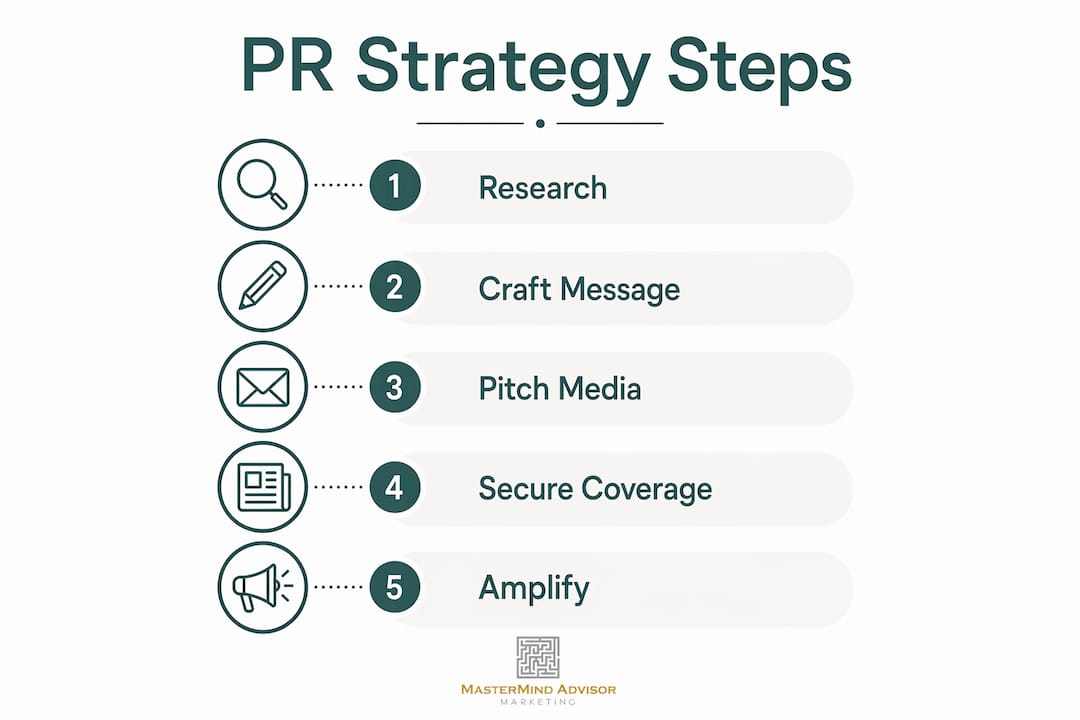
Research your media contacts before you write a single word. Read the journalist's last five articles. Note the angle they favor, the sources they quote, and the topics they avoid. A pitch that references their recent work shows you did your homework and immediately separates you from the bulk of generic outreach they receive.
Send your initial pitch on a Tuesday, Wednesday, or Thursday morning. Monday inboxes are overloaded. Friday pitches get buried before the weekend. Keep the pitch to one short paragraph: your hook, your credential, and a clear offer to provide more detail or an interview. Attach nothing. Journalists do not open attachments from unfamiliar senders.
A single polite follow-up sent a few days after the initial pitch is the maximum before you risk being blacklisted by media professionals. One follow-up is the industry standard. Sending three or four follow-ups signals desperation and damages your relationship with that journalist permanently. If they do not respond after one follow-up, move on and pitch a different outlet.
"Journalists are not ignoring you because your story is bad. They are ignoring you because your pitch did not connect your expertise to something their readers care about right now. Fix the hook, not the follow-up frequency."
Podcast hosts and guests with established thought leadership get prioritized for appearances. Podcasts are a high-value PR channel because episodes live permanently and get discovered through search. Target shows with audiences that overlap your ideal client profile. A retirement-focused podcast with 5,000 listeners who match your niche beats a general finance show with 50,000 listeners who do not. Pitch podcast hosts the same way you pitch journalists: specific hook, clear credential, timely angle.
Common pitfalls to avoid:
- Pitching the same story to multiple journalists at the same outlet simultaneously
- Sending pitches with no clear news hook or timeliness
- Following up more than once on the same pitch
- Ignoring smaller outlets in favor of only chasing major publications
- Failing to respond quickly when a journalist does express interest
How do you amplify earned media to maximize your PR investment?
Repurposing earned media across dedicated website pages, email newsletters, LinkedIn, and sales materials is the most direct way to maximize your PR return. A single placement in a respected publication can generate months of credibility if you distribute it correctly. Most advisors secure coverage and then do nothing with it. That is a significant missed opportunity.
Build an "As Seen In" page on your website and update it every time you earn new coverage. This page serves as a trust signal for every prospect who visits your site. Link each logo or publication name directly to the article. Prospects who see recognizable media logos on your site before they speak with you arrive with a higher baseline of trust.
Pro Tip: When sharing coverage on LinkedIn, do not just post the link. Write two to three sentences explaining the key insight from the article and why it matters to your clients. That context drives more engagement than a bare link post.
Additional amplification tactics that extend your PR reach:
- Add media mentions to your email signature with a line like "As featured in Investment News"
- Include a "Media" section in your client onboarding packet
- Reference specific articles in prospect meetings to reinforce your expertise
- Incorporate quotes from your media appearances into your client testimonials page
- Share coverage in your monthly email newsletter with a brief summary of the key takeaway
Your digital presence is the foundation that makes all earned media work harder. Without a professional website that houses your media coverage, your PR efforts lose half their impact the moment a prospect tries to verify your credibility online.
What challenges do independent advisors face with PR, and how do they solve them?
Time is the most common barrier. Most independent advisors run lean operations and cannot dedicate hours each week to media outreach. The solution is batching: set aside two hours every two weeks specifically for PR tasks. Use one session for research and pitch drafting, and the next for sending and follow-up. Consistency over two months produces more results than an intense week of outreach followed by months of silence.
The right infrastructure lets independent advisors focus on client relationships and growth rather than operational tasks. The same principle applies to PR. When your CRM tracks media contacts, your Google Alerts surface coverage automatically, and your website is already set up to display placements, the ongoing effort drops significantly.
Measuring PR impact requires tracking beyond vanity metrics. Website traffic from media referrals, new prospect inquiries that mention your coverage, and social media engagement on shared articles all indicate real PR return. Review these metrics quarterly and adjust your outlet targeting based on which placements actually drive prospect activity.
When to consider outsourcing PR support:
- You have secured no placements after three months of consistent outreach
- Compliance review of pitches is consuming too much time
- You want to target national publications that require more sophisticated relationship management
- Your practice growth goals require faster visibility than organic outreach can deliver
Key takeaways
An independent advisor PR strategy works when it combines outcome-based messaging, disciplined media outreach, and consistent amplification of every placement you earn.
| Point | Details |
|---|---|
| Lead with outcomes, not structure | Frame your independence as unbiased advice and broader solutions, not as a firm type. |
| Build your media kit first | A professional headshot, bio, and three talking points are required before any outreach. |
| One follow-up maximum | Sending more than one follow-up email risks being blacklisted by journalists permanently. |
| Amplify every placement | Share coverage on LinkedIn, your website, email newsletters, and client materials. |
| Track and adjust quarterly | Measure referral traffic and prospect inquiries from media to identify which outlets drive real results. |
Why most advisors underestimate the compounding value of PR
Most advisors treat PR as a one-time project rather than a long-term asset. That is the core mistake I see repeatedly. A single article in Financial Planning or a podcast appearance on a well-followed retirement show does not just generate one week of attention. It lives on your website, gets referenced in prospect meetings, and shows up in Google searches for your name for years.
The advisors who build the strongest PR presence are not the ones who land the biggest placements. They are the ones who pitch consistently, repurpose every placement they earn, and tie their messaging to what clients actually worry about. Outcome-based storytelling is not a marketing trend. It is the only way to make your expertise legible to someone who has never met you.
I have also seen advisors avoid PR entirely because they assume it requires a big budget or a full-time publicist. The guaranteed-placement models available today remove that barrier. You can test the channel with a single placement, measure the response, and scale from there. The advisors who wait for the perfect strategy before starting are the ones still waiting two years later.
The most underused PR channel for independent advisors is the local business press. National publications are competitive and slow. Your local business journal will often run a well-pitched story within weeks, and the credibility it builds with community-based prospects is disproportionate to the effort required. Start local, build your media track record, and then pitch upward.
— Josh
How Mastermindadvisormarketing supports your PR and marketing efforts
Building a PR strategy is most effective when it connects to a broader marketing system that nurtures prospects from first impression to signed client.

Mastermindadvisormarketing gives independent advisors the tools to turn PR visibility into real client relationships. The platform's seminar and webinar system gives you a live engagement channel that reinforces the credibility you build through earned media. Automated email follow-ups and custom CRM tools keep prospects engaged after they first encounter your name in the press. For advisors who want a complete picture of how to build their advisor marketing strategy, Mastermindadvisormarketing offers a turnkey system built specifically for independent practices.
FAQ
What is an independent advisor PR strategy?
An independent advisor PR strategy is a structured plan to earn media coverage and build credibility through targeted pitching, outcome-based messaging, and consistent amplification of placements across digital channels.
How often should independent advisors pitch media?
Pitch at least two to four outlets per month to maintain consistent visibility. Batch your outreach into focused sessions every two weeks rather than sporadic bursts.
What makes a financial advisor pitch stand out to journalists?
Journalists prioritize pitches that tie expertise to a trending story with a brief, direct, one-paragraph hook. Generic pitches without a timely news angle get ignored.
Should independent advisors outsource their PR?
Outsourcing makes sense when three months of consistent outreach produces no placements, or when compliance review of pitches consumes too much time. Guaranteed-placement models offer a low-risk way to test outsourced PR without long-term contracts.
How do independent advisors measure PR success?
Track website referral traffic from media outlets, new prospect inquiries that mention your coverage, and LinkedIn engagement on shared articles. Review these metrics quarterly and adjust your outlet targeting based on which placements drive actual prospect activity.