
An independent advisor's target market is the specific client segment they focus on to maximize growth and service quality. Without a defined niche, you compete on price against every other advisor in your region. With one, you compete on expertise. This guide covers the segmentation frameworks, identification steps, and positioning tactics that independent advisors need to build a practice around the right clients in 2026. The industry data from sources like AdvisorOS and FINRA makes the case clear: firm size, client demographics, and niche selection all shape how you grow.
What is an independent advisor target market guide?
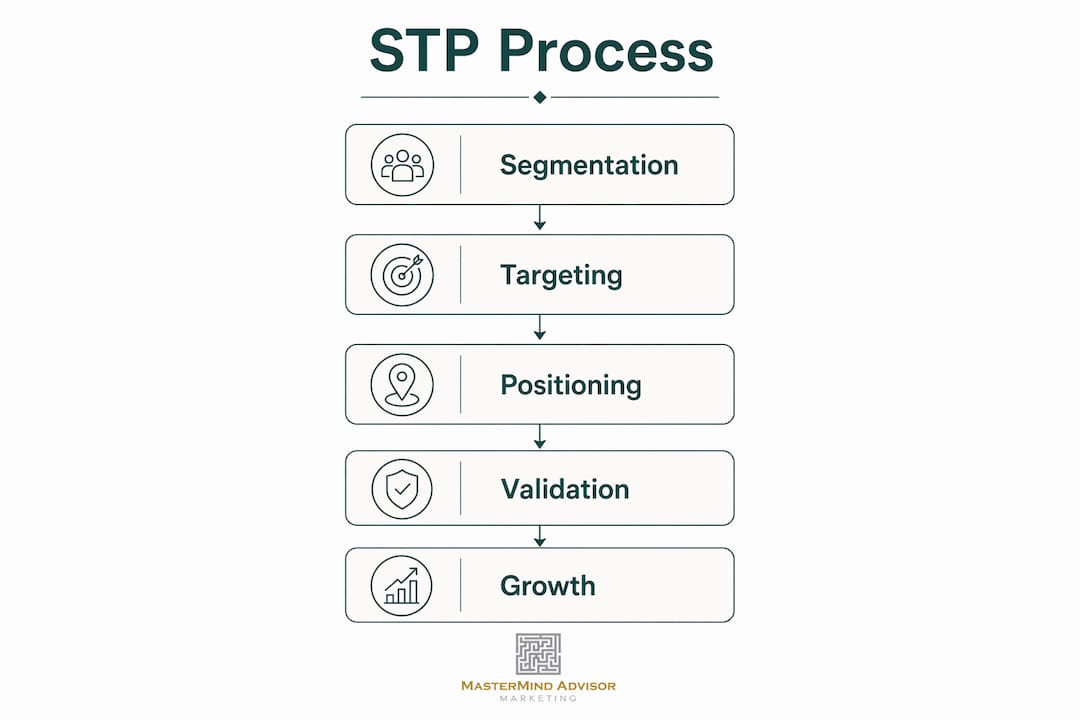
Market segmentation for advisors is the process of dividing a broad pool of potential clients into smaller groups based on shared characteristics, then choosing which group to serve. The industry term for this process is STP: Segmentation, Targeting, and Positioning. Every effective independent advisor target market guide starts there.
Small firms with 2–10 employees make up 53% of independent advisors. That means the majority of you are working with limited staff, limited marketing budgets, and limited time. Trying to serve everyone is not a strategy. It is a slow drain on every resource you have.

Client-type niches, such as "financial planning for tech workers" or "retirement income for federal employees," produce more sustainable growth than service-type niches like "investment management" or "tax planning." Client-type niches capture the full financial relationship. Service niches attract one-time engagements.
Referral programs drive 70% of new business for independent advisors. That number matters because referrals flow most naturally within a niche. When your clients know exactly who you serve, they refer people who fit that profile.
How do you segment your potential clients effectively?
Segmentation works across four dimensions: demographic, geographic, psychographic, and behavioral. Each one reveals something different about who your ideal client is and what they need.
- Demographic: Age, income, occupation, family status, and net worth. A solo advisor targeting pre-retirees aged 55–65 with $500,000–$1.5 million in investable assets has a clear demographic profile.
- Geographic: Location shapes market size and competition. New York leads with 23,462 advisors, followed by California with 16,304 and Texas with 7,275. If you practice in a saturated state, geographic sub-niching by metro area or suburb becomes critical.
- Psychographic: Values, attitudes, and financial behaviors. Some clients want a hands-off relationship. Others want monthly check-ins and detailed reports. Psychographic segmentation helps you match your service model to client expectations.
- Behavioral: How clients make financial decisions, what triggers them to seek advice, and how they prefer to communicate.
Millennials now make up approximately 57% of clients in many RIAs. That shift means demographic segmentation alone is no longer enough. Millennial clients expect digital interaction, fast responses, and transparent fee structures. Advisors who ignore psychographic and behavioral data miss the fastest-growing client segment in the market.
Pro Tip: Review your last 20 client files and tag each one by occupation, age range, and the primary financial concern that brought them to you. Patterns will emerge faster than you expect.
How to identify and prioritize your ideal target market
The STP methodology gives you a repeatable process. Here is how to apply it as an independent advisor.
- Audit your current clients. List your top 20 clients by revenue and satisfaction. Identify what they have in common: profession, life stage, financial complexity, or geography. Your best niche is often already hiding in your existing book.
- Assess your own strengths and interests. Advisors who specialize in areas they genuinely understand serve clients better and market more credibly. If you spent 10 years in healthcare before becoming an advisor, physician financial planning is a natural fit.
- Evaluate market demand. A niche needs enough potential clients to be viable. Effective niches allow you to fill 40–100 clients within your geographic reach. Narrower than that and you limit your growth ceiling. Broader than that and you lose the identity that makes referrals work.
- Assess competition. Search for advisors in your area who already serve your target segment. If five established practices already dominate that niche locally, you need a differentiator or a different segment.
- Test before committing. Run a seminar, publish three articles, or host a webinar for your target segment. Measure attendance, engagement, and conversion. Real market feedback beats assumptions every time.
- Refine based on results. Targeting is not a one-time decision. Review your niche every six months and adjust based on client acquisition data and revenue trends.
The table below maps each STP stage to a concrete advisor action.
| STP Stage | Advisor Action | Success Indicator |
|---|---|---|
| Segmentation | Audit client files for shared traits | Clear demographic and psychographic clusters |
| Targeting | Select one primary segment to pursue | Defined niche with 40–100 reachable clients |
| Positioning | Craft niche-specific messaging and service model | Consistent referrals from within the niche |
How do you position your services within your target market?
Positioning is the message your target clients hear before they ever speak to you. It lives on your website, in your seminar titles, and in how your existing clients describe you to friends. Getting it right is what separates advisors who grow from advisors who stay flat.
Niche advisors charge 20–30% higher fees with less resistance from clients. Clients pay premium fees when they believe they are getting specialized expertise, not generic advice. Your positioning has to communicate that expertise at every touchpoint.
- Lead with the client's problem, not your credentials. "I help airline pilots manage their pension and stock options" is more compelling than "I provide comprehensive financial planning services."
- Align your digital presence with your niche. Your website, LinkedIn profile, and content should all speak directly to your target segment. A physician reading your site should feel like you wrote every word for them.
- Use client language, not advisor language. Your clients do not think in terms of "asset allocation" or "Monte Carlo simulations." They think about retiring comfortably, paying for college, or protecting their business.
- Build authority through content. A blog post titled "How Tech Employees Should Handle RSU Vesting" does more targeting work than any paid ad campaign.
Independent advisors maintain a 97% client retention rate with satisfaction scores 20% higher than bank advisors. That advantage comes from relationship depth, which niche positioning makes possible. When clients feel understood, they stay and they refer.
Pro Tip: Write one piece of niche-specific content per month for six months. Track which topics generate the most inquiries. Those topics reveal what your target market actually worries about.
You can also use marketing automation to deliver that content consistently without adding hours to your week.
What are the common challenges when targeting a niche market?
Niche targeting creates real problems if you approach it without a plan. Knowing the pitfalls in advance saves you months of wasted effort.
- Over-narrowing your niche. Targeting "divorced female physicians in suburban Atlanta aged 45–55" sounds precise, but the pool may be too small to sustain a practice. Test market size before committing.
- Choosing a niche based on interest alone. Passion for a segment matters, but that segment also needs to have money to manage and a willingness to pay for advice. Validate demand before you rebrand.
- Ignoring competitive density. Some niches, like "small business owners" or "retirees," are so broadly targeted that you gain no real differentiation. Specificity is what makes a niche work.
- Failing to pivot when data says to. Advisors sometimes stay loyal to a niche that is not producing results because they have already invested in branding and content. Set a 12-month review point and be willing to adjust.
- Underestimating the time to build niche authority. Becoming known in a niche takes 12–24 months of consistent content, networking, and referral cultivation. Advisors who quit after three months never see the return.
Solo practices, which make up 14% of independent advisors, face the sharpest resource constraints. For solo advisors, a marketing automation checklist can help you maintain consistent outreach without hiring additional staff. Consistency beats volume when you are building niche authority.
The independent advisor service model you choose also affects which niches are feasible. A retainer-based model works well for high-complexity client types like business owners. An AUM model fits better with wealth accumulation niches.
Key Takeaways
Advisors who define a specific client-type niche, validate market size, and position their services with niche-specific messaging consistently outgrow generalist practices in both revenue and retention.
| Point | Details |
|---|---|
| Client-type niches outperform service niches | Niches built around client identity capture deeper relationships and command premium fees. |
| Validate niche size before committing | Target a segment large enough to fill 40–100 clients within your geographic reach. |
| Positioning drives referrals | Niche-specific messaging makes it easy for clients to refer others who fit your profile. |
| Millennials require digital engagement | 57% of RIA clients are millennials; your targeting must include digital and behavioral criteria. |
| Consistency builds niche authority | Expect 12–24 months of content and networking before a niche produces consistent referrals. |
Why niche selection is the highest-leverage decision you will make
I have worked with independent advisors long enough to see a clear pattern. The ones who double their AUM in three years are almost never the ones who added more services. They are the ones who got more specific about who they serve.
The counterintuitive truth is that narrowing your focus expands your growth. When you serve a defined group, your referral network becomes self-reinforcing. One tech employee refers another. One physician tells a colleague. The niche does the marketing for you once you have built enough credibility inside it.
What I find most advisors get wrong is choosing a service niche instead of a client niche. "I specialize in tax-efficient investing" is a service. "I work with early-retirees from Fortune 500 companies navigating their first five years without a paycheck" is a client. The second one creates an identity. The first one creates a feature list.
The millennial shift is real and it changes how you target. These clients do not want quarterly statements mailed to them. They want a portal, a text response within hours, and a financial plan they can access on their phone. Advisors who build their niche around millennial client expectations and then deliver on them digitally are the ones gaining ground right now.
The niche selection process is not complicated, but it requires honesty about where your practice actually stands versus where you want it to go. Start with your best clients. Build from there.
— Josh
How Mastermindadvisormarketing supports your target market strategy
Identifying your niche is step one. Reaching those clients consistently is where most advisors stall. Mastermindadvisormarketing builds turnkey marketing systems designed specifically for independent financial advisors, covering everything from segmented email campaigns to custom CRM workflows that keep prospects moving toward a meeting.
The platform's seminar and webinar tools let you host educational events that attract exactly the client type you are targeting. Automated follow-up sequences then nurture those prospects without requiring you to manage every touchpoint manually. Advisors who use Mastermindadvisormarketing report stronger lead pipelines and faster niche authority. If you are ready to put your target market strategy into motion, Mastermind Advisor is built to get you there.
FAQ
What is a target market for an independent financial advisor?
A target market for an independent advisor is a defined client segment the advisor focuses on based on shared demographics, financial needs, or life circumstances. Focusing on one segment produces stronger referrals and higher client retention than serving a broad, undifferentiated audience.
How many clients does a viable niche need to support?
A sustainable niche should allow you to fill 40–100 clients within your geographic reach. Narrower than that limits growth; broader than that dilutes your identity and weakens referral flow.
Why do client-type niches outperform service-type niches?
Client-type niches build deeper relationships and capture the full financial picture of a client's life. Service niches attract one-time or transactional engagements that rarely generate referrals or long-term loyalty.
How does demographic data affect target market selection?
Demographic shifts directly change which segments are most viable. Millennials now make up approximately 57% of clients in many RIAs, meaning advisors who ignore digital engagement and behavioral preferences in their targeting are missing the largest and fastest-growing client group.
How long does it take to build authority in a niche?
Building recognized expertise in a niche typically takes 12–24 months of consistent content creation, community involvement, and referral cultivation. Advisors who commit to that timeline see compounding returns in both inbound leads and client quality.