

An online presence is defined as the full set of digital touchpoints where a financial advisor can be found, evaluated, and contacted, including a website, social media profiles, search engine listings, and online directories. Why advisors need online presence is no longer a question of preference. 52% of prospective clients research an advisor online before making their first phone call, and 31% of new clients initially find their advisor through online search or social media. Digital credibility is now a commercial prerequisite in wealth management. Advisors who lack a visible, consistent online identity lose prospects before a single conversation begins.
Why advisors need online presence to win new clients
The modern client journey starts on Google, not with a referral call. A prospect hears your name at a dinner party, then immediately searches for you online. What they find in the next 90 seconds determines whether they call you or move on to someone else.
Organic search drives 38–54% of qualified prospect inquiries for established advisory firms. That share represents real people with real money, actively looking for help. Advisors without a visible web presence simply do not appear in those searches.
Social media plays an equally direct role. 29% of all Americans use social media for financial advice. Among Gen Z and Millennials, that number jumps to 79%. These are the clients who will define your book of business over the next two decades.

Digital credibility also functions as pre-meeting proof. Before a prospect agrees to sit down with you, they want to verify your expertise, your values, and your communication style. A well-built website and an active LinkedIn profile do that work for you around the clock. Advisors who build trust online before the first meeting arrive at that meeting with a significant advantage.
What prospects look for before they call
- Professional website with clear credentials, services, and a visible call to action
- LinkedIn profile that matches the website's messaging and shows recent activity
- Google Business Profile with accurate contact details and client reviews
- Published content such as blog posts or articles that demonstrate subject matter knowledge
- Social media activity that signals the advisor is engaged and accessible
Each of these signals builds a layer of trust. Missing even one creates doubt.
What digital channels actually move the needle
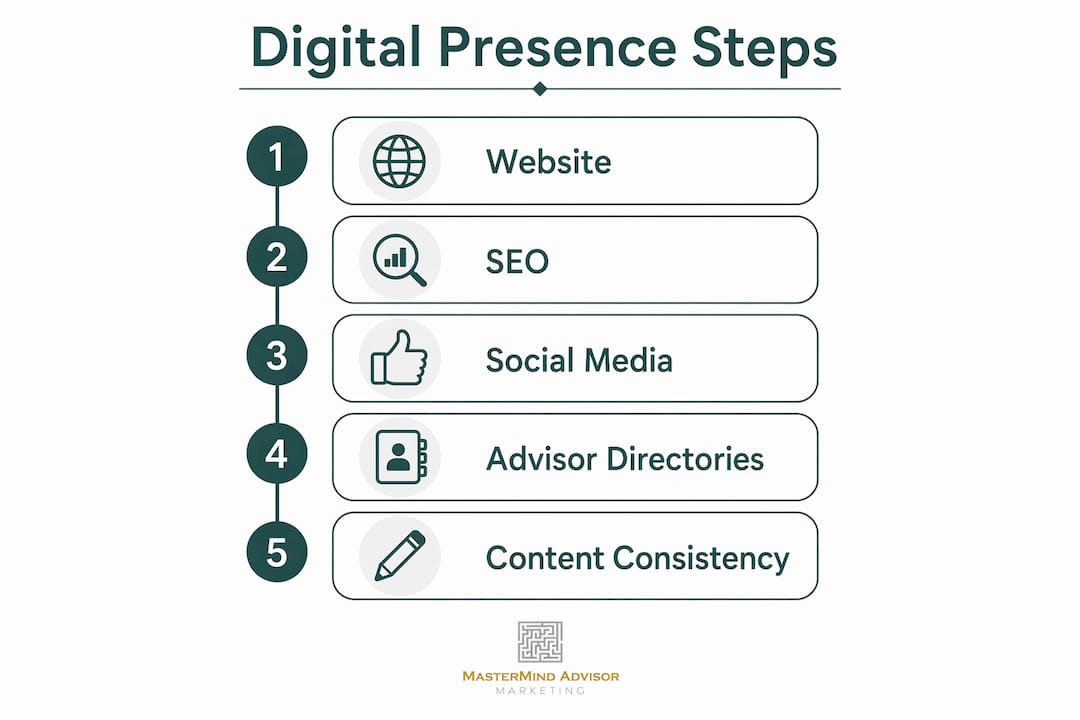
A website is the foundation. Mobile traffic to advisor websites has grown 150% since 2019. A site that loads slowly or breaks on a phone screen loses visitors before they read a single sentence. Advisors should treat their website as a lead generation asset, not a digital business card.
Search engine optimization
SEO is the discipline of making your website appear in Google search results for the terms your ideal clients type. Financial advisor SEO takes 9–14 months to reach top-10 rankings on competitive keywords. Local Map Pack visibility, however, is achievable within 60–90 days. That early win matters because it puts your name in front of local prospects who are ready to act.
Building topical authority requires publishing 30–60 substantive content pieces focused on your niche and the questions your clients actually ask. That sounds like a lot. It is not if you publish two posts per month and stay consistent for two years. The role of SEO for advisors is not just traffic. It is qualified traffic from people who already want what you offer.
Social media and advisor directories
Social media is not optional for advisors who want to reach younger investors. 23% of Gen Z adults will not consider an advisor without an active online presence. That is a hard filter applied before you ever get a chance to speak.
Advisor directories such as NAPFA, XYPN, and BrightPlan generate referral traffic and authoritative backlinks that support SEO rankings. They also serve as third-party validation. A prospect who finds you on a reputable directory arrives with more trust than one who finds you through a cold ad.
Pro Tip: Choose your social platforms based on where your ideal clients spend time, not where you feel most comfortable. LinkedIn works best for professionals and business owners. Instagram and TikTok reach younger investors. You do not need to be everywhere. You need to be consistent where it counts.
Why consistency and authenticity define your digital brand
Consistency across all digital platforms is the single most important trust signal for financial advisors. When your LinkedIn bio says one thing, your website says another, and your Google profile lists a different phone number, prospects notice. That friction creates doubt, and doubt kills conversions.
"Advisors should align their website, Google Business Profile, and LinkedIn profiles perfectly to avoid client doubts from inconsistent information. Inconsistencies create cognitive dissonance that can deter high-net-worth clients before any meeting takes place."
Authenticity matters just as much as consistency. Young investors expect advisors to be approachable and transparent online. They respond to a consultative tone, not a sales pitch. An advisor who posts about market volatility in plain language, answers questions in comments, and shares their actual point of view builds more trust than one who only posts compliance-approved promotional content.
Advisors active on social media post or engage an average of 35 times per month. That cadence is not about volume for its own sake. It signals that the advisor is present, engaged, and worth following. Clients who follow you for months before they need help already feel like they know you when they finally reach out.
Pro Tip: Compliance does not have to kill your voice. Write posts in your natural tone, then run them through your compliance review process. Most firms allow educational content, market commentary, and personal perspectives. The goal is to sound like a person, not a disclaimer.
Practical steps to build and grow your digital presence
Building a strong online presence does not require a full marketing team. It requires a clear plan and consistent execution. The steps below move from immediate priorities to longer-term growth strategies.
- Launch or refresh your website. Your site needs a clear headline, a description of who you serve, your credentials, and a direct call to action. Every page should load in under three seconds on mobile.
- Claim and complete your Google Business Profile. Add your address, phone number, hours, and a professional photo. Ask satisfied clients to leave a review.
- Optimize your LinkedIn profile. Use a professional headshot, write a headline that describes the clients you serve, and publish at least two posts per month.
- Start an SEO content plan. Identify five to ten questions your ideal clients ask most often. Write one clear, helpful article answering each question. Publish consistently.
- List yourself in advisor directories. NAPFA, XYPN, and similar directories add credibility and drive referral traffic. Keep your profile information identical across all listings.
- Engage with your audience. Respond to comments, answer questions, and acknowledge messages. Engagement signals activity and builds connection.
For advisors who want to accelerate results, digital lead generation strategies like webinars and automated email follow-ups compound the impact of every other channel. A webinar, for example, converts passive followers into warm prospects in a single session.
| Tactic | Timeframe | Expected outcome |
|---|---|---|
| Google Business Profile setup | 1–2 weeks | Local search visibility within 60–90 days |
| LinkedIn profile optimization | 1 week | Improved credibility with professional prospects |
| Website refresh with clear CTA | 2–4 weeks | Higher conversion rate from existing traffic |
| SEO content publishing | 6–14 months | Sustained organic lead flow from search |
| Social media posting cadence | Ongoing | Audience growth and brand recognition |
| Webinar and email follow-up | 30–60 days setup | Direct lead generation and client nurturing |
Key Takeaways
Financial advisors who build a consistent, visible online presence across search, social media, and directories acquire more clients and build deeper trust before the first meeting.
| Point | Details |
|---|---|
| Prospects research you first | 52% of prospects check an advisor online before calling, making digital presence a prerequisite. |
| Organic search drives real leads | 38–54% of qualified inquiries for advisory firms come from organic search. |
| Younger clients demand it | 23% of Gen Z adults will not consider advisors without an active online presence. |
| Consistency builds trust | Mismatched profiles across platforms create doubt that deters high-net-worth clients. |
| SEO rewards patience | Top rankings take 9–14 months, but local visibility is achievable within 60–90 days. |
What I've learned watching advisors win and lose online
I have watched advisors with exceptional credentials lose prospects to less experienced competitors simply because their online presence was thin or outdated. The prospect did not know the difference in expertise. They only saw what Google showed them.
The most common mistake I see is treating a website as a one-time project. Advisors build a site, feel satisfied, and then ignore it for three years. Meanwhile, their competitors are publishing content, collecting reviews, and showing up in local searches every week. The gap compounds quietly until it becomes very hard to close.
The second mistake is confusing activity with strategy. Posting randomly on LinkedIn without a clear message or audience in mind produces almost no results. The advisors who grow online do so because they understand who they are trying to reach and what those people need to hear before they trust someone with their financial future.
Digital presence is not a marketing tactic. It is an ongoing relationship-building platform. Every article you publish, every question you answer, and every review you earn adds to a body of evidence that tells prospects you are the right choice. The advisors who treat it that way are the ones who build practices that grow without depending entirely on referrals.
The technology side is getting easier. AI tools, virtual meeting platforms, and automated follow-up systems now handle tasks that used to require a full staff. The barrier is not technical. It is the decision to show up consistently and let your expertise speak for itself online.
— Josh
How Mastermindadvisormarketing helps advisors build their digital presence
Building a credible online presence takes time, expertise, and a system that works together as a whole. Most independent advisors do not have all three.
Mastermindadvisormarketing is built specifically for independent financial advisors who want to grow without hiring a full marketing department. The platform covers website design, SEO, social media management, and content marketing for advisors, all coordinated through a single system. Custom CRMs and automated email follow-ups keep prospects engaged between touchpoints. Advisors who use the platform report stronger lead flow and a more consistent brand across every channel. Visit Mastermind Advisor to see how the system works for practices like yours.
FAQ
Why do advisors need an online presence?
52% of prospects research advisors online before making first contact. Advisors without a visible digital presence are eliminated from consideration before any conversation begins.
Can advisors thrive without a website?
No. A website is the foundation of every other digital channel. Without one, advisors cannot rank in search, direct prospects to their credentials, or capture leads from social media or directories.
How long does it take to see results from SEO?
Top-10 rankings take 9–14 months on competitive keywords. Local Map Pack visibility is achievable within 60–90 days with a properly optimized Google Business Profile.
Which social media platform is best for financial advisors?
LinkedIn is the strongest platform for reaching professionals and business owners. Advisors targeting Gen Z and Millennials should also consider Instagram, where 79% of younger investors use social media for financial guidance.
How often should advisors post on social media?
Advisors active on social media average 35 posts or engagements per month. Consistency matters more than frequency. Two to three quality posts per week outperform daily low-effort content.