
An advisor webinar is a live or recorded online event designed specifically for financial professionals to educate prospects, engage existing clients, and generate qualified leads through targeted virtual presentations. For independent advisors, this format has become the most cost-effective way to reach multiple prospects at once without the overhead of in-person events. Platforms like Wealthbox and Docupace have made it easier to connect webinar activity directly to CRM pipelines. Many sessions now offer CE credits for CFP® or CIMA® certifications, which significantly boosts attendance and broadens reach across the profession.
How do advisor webinars fit into a lead generation strategy?
A financial advisor webinar is not a standalone event. It is the top of a marketing funnel that, when built correctly, moves a cold prospect through education, trust, and conversion. The webinar creates the first meaningful touchpoint. Everything after it determines whether that prospect becomes a client.
The most effective approach connects your webinar platform directly to a CRM like Wealthbox. CRM integration lets you track who attended, how long they stayed, and what questions they asked. That data feeds directly into follow-up workflows so no lead goes cold after the session ends.

Automated email sequences are the engine behind post-webinar conversion. A prospect who watches your full session on Roth conversion strategies should receive a different follow-up than someone who dropped off after ten minutes. Segmented sequences, built inside tools like Wealthbox or CallBack CRM, automate this follow-up and keep your practice top of mind without manual effort.
Branded landing pages matter more than most advisors realize. Your registration page is the first impression of your practice. A generic Zoom link signals low effort. A page with your logo, a clear topic description, and a short advisor bio signals professionalism before the session even starts.
- Connect your webinar tool to your CRM before the first registration comes in
- Segment attendees by engagement level immediately after the session
- Send the first follow-up email within 24 hours while attention is highest
- Use your landing page to collect phone numbers, not just email addresses
- Track every registrant, not just attendees, since no-shows are still warm leads
Pro Tip: Set up a separate CRM tag for webinar registrants who did not attend. These contacts already showed intent. A short "missed you" email with a replay link converts at a surprisingly high rate.
Webinars embedded in a marketing funnel with automated email sequences convert prospects at a higher rate than sessions with no follow-up infrastructure. The webinar gets attention. The system behind it closes the gap.
What are the best practices for planning impactful sessions?
Content planning is where most advisory practice webinars either succeed or fail. The topic must match a specific concern your ideal client already has. "Retirement income planning for federal employees" outperforms "retirement planning tips" every time. Specificity signals expertise and attracts the right audience.
Technology selection is the second major decision. Your platform needs four things: reliable recording, interactive features like polls and live Q&A, accessibility options like closed captions, and a clean attendee experience on mobile. Selecting a reliable platform with these features directly affects how professional your session feels and how long attendees stay engaged.
- Choose a specific, audience-focused topic. Avoid broad subjects. Pick one problem your ideal client faces and build the entire session around solving it.
- Build your agenda around a 45-minute format. Thirty minutes of content followed by fifteen minutes of live Q&A is the format that holds attention and generates the most post-session conversations.
- Add interactive elements throughout. Interactive features like polls and live Q&A increase engagement and retention. Open with a poll question to warm up the audience before your first slide.
- Record every session. Recordings extend the life of your content. Send the replay to no-shows, post it on your website, and repurpose clips for social media.
- Plan your compliance review before you go live. Any session touching estate planning, tax strategy, or legal structures needs a compliance review. Build that step into your production timeline, not as an afterthought.
Pro Tip: End every session with a single, specific call to action. "Schedule a 20-minute call this week" outperforms "reach out anytime." Specificity reduces friction and increases bookings.
How do you measure success and optimize over time?
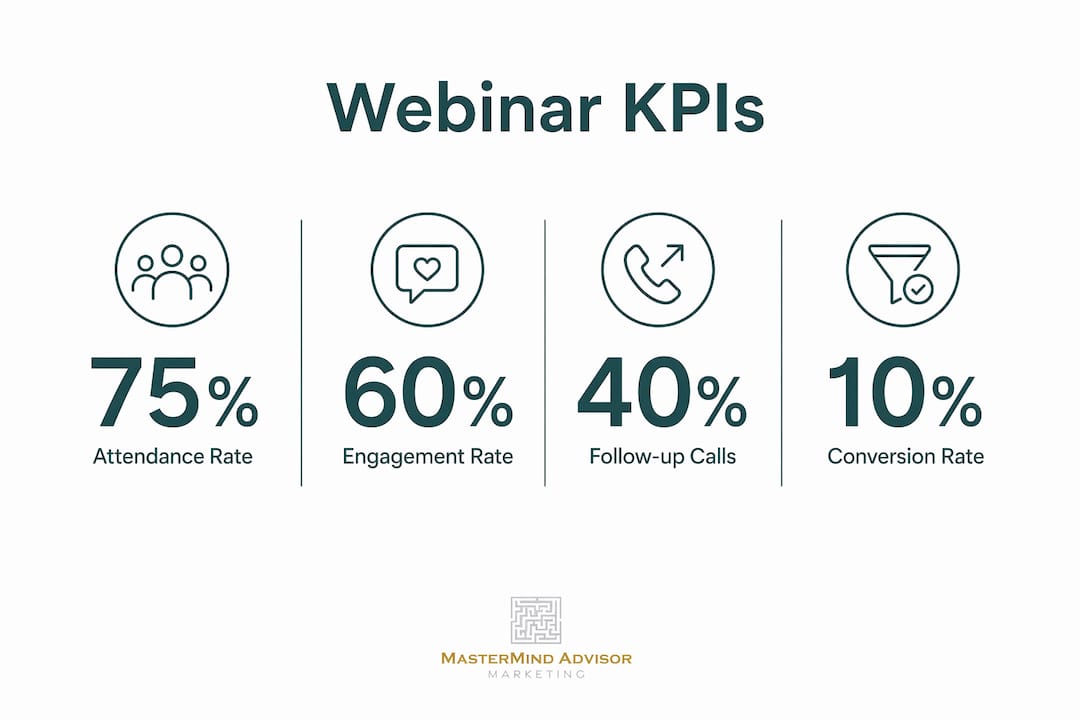
The three KPIs that matter most for any investment webinar series are attendance rate, engagement rate, and follow-up conversion rate. Attendance rate tells you whether your topic and promotion worked. Engagement rate, measured by poll responses, Q&A participation, and session duration, tells you whether your content held attention. Follow-up conversion rate tells you whether your post-session system is working.
| KPI | What it measures | Target benchmark |
|---|---|---|
| Attendance rate | Registrants who showed up live | 40–60% of registrants |
| Engagement rate | Polls, Q&A, and chat activity | 30%+ of attendees active |
| Replay views | No-shows who watched the recording | 20%+ of no-shows |
| Follow-up conversion | Attendees who booked a call | 10–20% of engaged attendees |
CRM data is the most underused optimization tool in advisory practice webinars. When you track individual attendee behavior inside Wealthbox or a similar system, you can identify which topics drove the most post-session calls and which formats lost people early. That data tells you exactly what to repeat and what to cut.
Surveying attendees and analyzing engagement data drives content improvement and higher future attendance. A three-question post-session survey sent within one hour of the session ending captures honest feedback while the experience is fresh. Ask what was most useful, what was unclear, and what topic they want next. Those answers build your next three sessions.
CE credits are a proven lever for growing your audience over time. Sessions offering 0.5–1.0 CE hours for CFP® or CIMA® certifications attract advisors who are actively seeking professional development. That audience is engaged, qualified, and likely to return for future sessions.
What compliance risks should advisors avoid in webinars?
Unauthorized practice of law, known as UPL, is the most serious compliance risk in any webinar for financial planners covering estate or tax planning topics. UPL occurs when an advisor crosses from providing general education into giving specific legal advice. The line is narrower than most advisors expect.
The distinction between information and advice is the core of UPL compliance. Explaining how a revocable living trust works is education. Telling a specific attendee they should create one is legal advice. The first is appropriate for a webinar. The second requires a licensed attorney.
- Always open sessions with a verbal and on-screen disclaimer stating the content is educational and not legal or tax advice
- Never answer live Q&A questions with specific recommendations for individual situations
- Direct attendees with specific legal questions to a licensed attorney or your firm's legal counsel
- Use attorney networks like the Vanilla Attorney Network to provide compliant referrals when attendees need individualized guidance
- Review all slide content with your compliance officer before the first live session
"Providing legal disclaimers and using attorney networks such as the Vanilla Attorney Network helps mitigate UPL risks while maintaining client value." UPL 101 for Advisors
Avoiding promises or guarantees is equally non-negotiable. Any language suggesting a specific return, tax outcome, or legal result creates regulatory exposure. Keep all performance language historical and clearly labeled. Your compliance team should review every session script before it goes live.
Key Takeaways
The most effective advisor webinar strategy combines specific topic selection, CRM-backed follow-up, interactive engagement, and strict compliance guardrails to convert attendees into clients.
| Point | Details |
|---|---|
| CRM integration is non-negotiable | Connect your webinar platform to Wealthbox or a similar CRM before your first session to track and convert leads. |
| Specificity drives attendance | Narrow, audience-specific topics outperform broad subjects and attract more qualified prospects. |
| Compliance review comes first | Any session covering estate or tax planning needs a compliance and UPL review before going live. |
| Follow-up determines conversion | Segmented email sequences sent within 24 hours of the session convert far more attendees than a single generic email. |
| CE credits expand your reach | Offering CFP® or CIMA® CE credits increases attendance and brings in a more engaged, professional audience. |
Why most advisors underestimate the post-webinar window
I have worked with enough independent advisors to know where the real opportunity gets lost. It is not in the webinar itself. The content, the slides, the live Q&A — advisors put real effort into those. The gap is almost always in the 72 hours after the session ends.
Most advisors send one follow-up email and consider the job done. The prospects who attended but did not book a call are still warm. They watched your session. They raised their hand by registering. The difference between a practice that converts 5% of webinar attendees and one that converts 18% is almost entirely in the follow-up infrastructure.
I have also seen advisors avoid estate planning and tax topics entirely because they are nervous about UPL exposure. That is the wrong response. Those topics are exactly what your clients want to discuss. The answer is not avoidance. The answer is building the right guardrails: a clear disclaimer, a scripted response for specific legal questions, and a referral path to an attorney network like Vanilla. You can cover high-value topics compliantly. You just need the system in place before you go live.
The advisors who treat their online advisor training sessions as integrated CRM events rather than one-off presentations are the ones building real pipelines. The webinar is the door. The system behind it is what keeps people walking through.
— Josh
Ready to turn your next webinar into a client pipeline?
Mastermindadvisormarketing builds turnkey webinar marketing systems specifically for independent financial advisors. From branded landing pages and automated email follow-ups to CRM integration and compliance-ready content frameworks, the platform handles the infrastructure so you can focus on delivering value to your audience.
If you are ready to host sessions that generate real leads, the advisor marketing resources at Mastermindadvisormarketing give you a proven starting point. For advisors who want a step-by-step framework on execution, the seminar hosting guide covers everything from room setup to post-event follow-up. Your next session can do more than educate. It can fill your calendar.
FAQ
What is an advisor webinar?
An advisor webinar is a live or recorded online session hosted by a financial professional to educate prospects or clients on specific financial topics. It functions as both a marketing tool and a client engagement channel.
How do CE credits affect webinar attendance?
Offering 0.5–1.0 CE hours for CFP® or CIMA® certifications significantly increases attendance by giving advisors a professional development incentive to register and show up live.
What is UPL and why does it matter for financial webinars?
Unauthorized practice of law occurs when an advisor provides specific legal advice rather than general education. Any webinar covering estate or tax planning must include clear disclaimers and avoid individualized legal recommendations to stay compliant.
Which CRM tools work best for webinar follow-up?
Wealthbox and Docupace are widely used by independent advisors to track webinar engagement and automate follow-up workflows. Both platforms integrate attendee data directly into client pipelines.
How soon should I follow up after a webinar?
Send the first follow-up email within 24 hours of the session ending. Segmenting by engagement level, full attendees versus early drop-offs versus no-shows, produces significantly higher conversion rates than a single broadcast email.